
For when you're scared to move
Bracing every time you sneeze?
When you're scared to bend, lift or even cough, the pain is often coming from your brain, not your spine. We teach you how to retrain it, about 10 minutes a day.
In a University of Colorado study, 2 out of 3 people who learned it were pain-free or close to it after four weeks. Results vary.
Free 2-minute quiz · No email to start
Sound familiar?
“I am so scared to step wrong, turn to fast, stand up, sit down, cough, sneeze, lift, you name it.”
A composite story
She sneezes with one hand on the counter, just in case.
She rolls out of bed like a log. Some days she eats standing up, because sitting down and getting up again feels like a risk. She hasn't carried the laundry upstairs in a year.
The injury that started it was two years ago. Somewhere along the way her brain decided that every bend was dangerous, and it hurts to prove the point.
Built from what women write about this online. Not a real person.
What's going on
Your pain is real. It's often coming from your brain, not your spine.
Your brain's job is to protect you, and that includes protecting you from emotional pain. The conversation you keep putting off. The fight you keep going over. The pressure you carry on your shoulders every day.
Some people can be distracted from all that by something small. Not you. You'd see right through it. So your brain has to give you something real to feel: physical pain.
It usually borrows an excuse. A tweak lifting the car seat, a bad night's sleep, an old injury. Something that should hurt for a week or two. Then the pain keeps going for months, and the injury takes the blame.
The clue in her story: the pain shows up when she thinks about bending, before she has bent. That's an alarm going off early. Your pain is real and physical, and an alarm can be turned down.
Sounds crazy. It's also been tested. In a University of Colorado study, 2 out of 3 people who learned it were pain-free or close to it after four weeks. Results vary. The science
Try it · 30 seconds
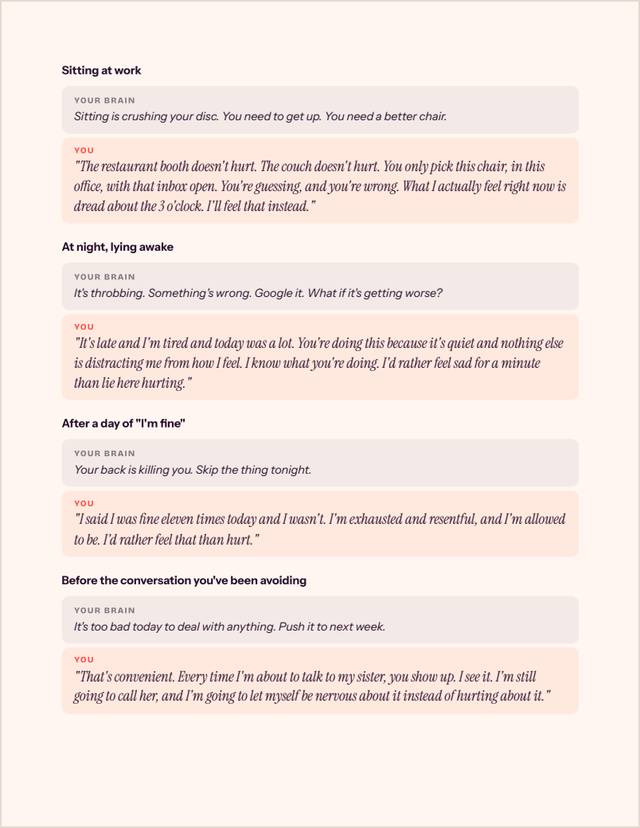
This is how it stops. Talk back.
When the pain shows up, you answer your brain instead of obeying it. Pick what you'd say back.
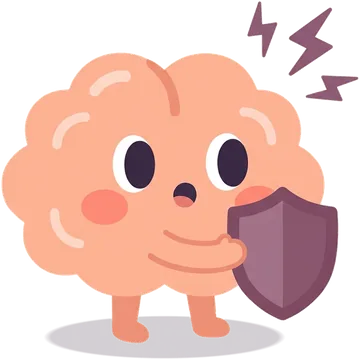
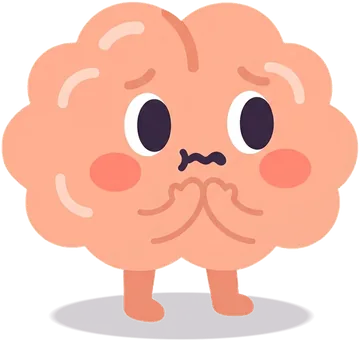

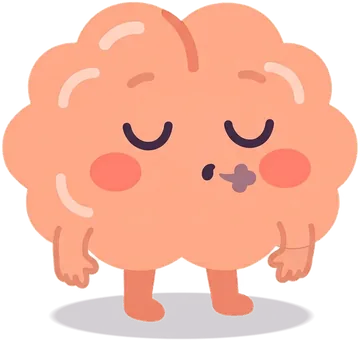
Your brain
On high alert
Don't bend. Don't twist. Maybe don't sneeze.
That's the practice. Notice what your brain is doing, let yourself feel the hard thing, and go back to your life. Every day, until your brain believes you.
In a University of Colorado study, 2 out of 3 people who learned it were pain-free or close to it after four weeks. Results vary.
Free 2-minute quiz · No email to start
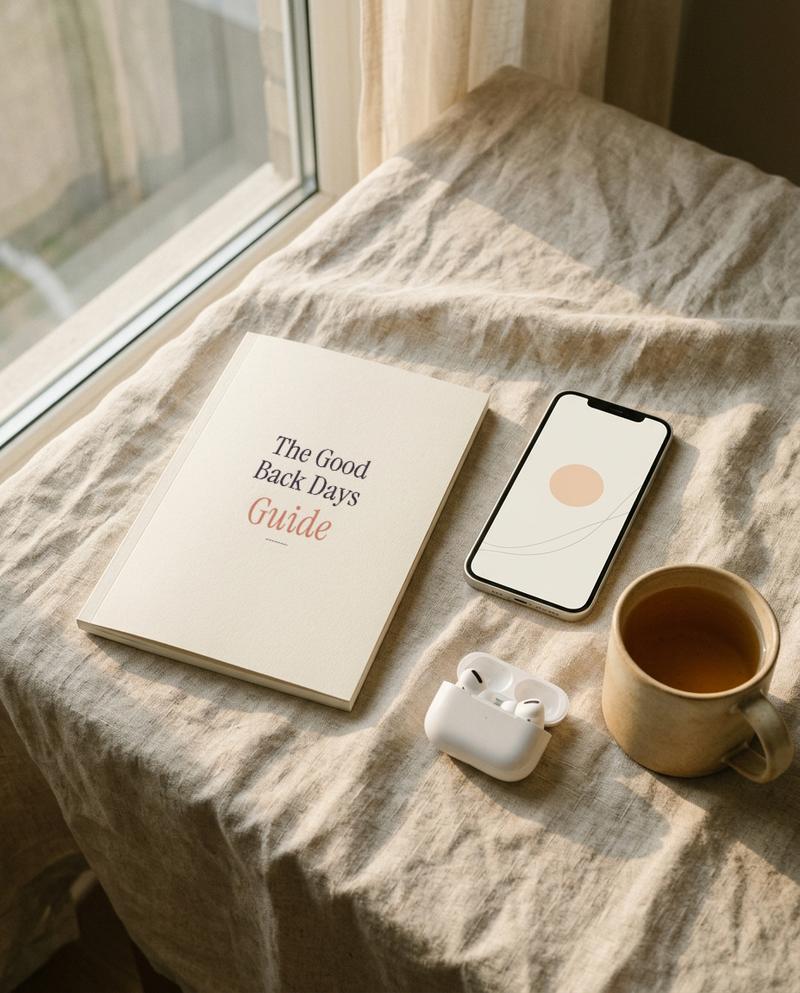
The Good Back Days Guide
Start tonight. Keep it for good.
$19
once, yours to keep.
One payment. Nothing renews.
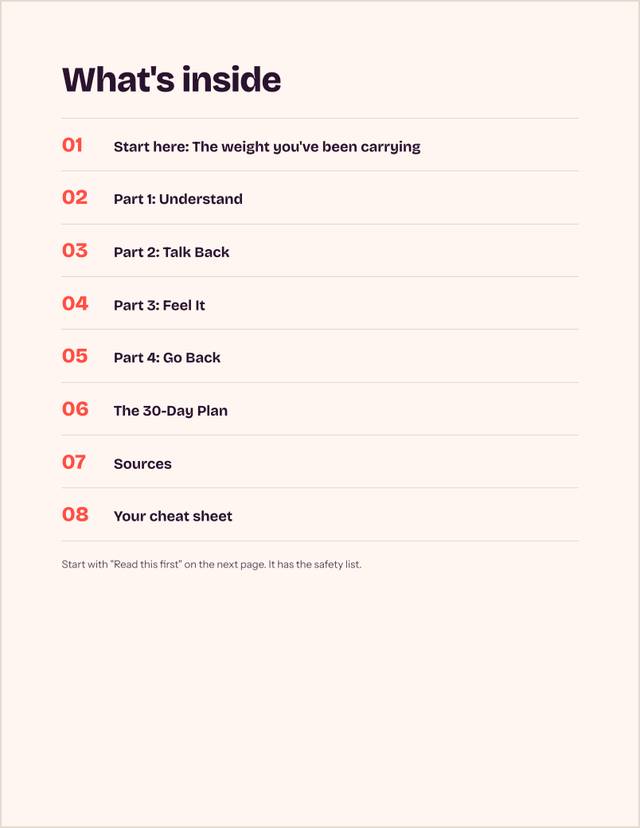
- The guide, with the studies30 pages
- What to say back, word for wordScripts
- The bedtime audio16 min
- The cheat sheet and bad-day planPrint it
Hear the first 30 seconds of the bedtime audio:
One payment · Nothing renews · Apple Pay, Google Pay or card
The Good Days Guarantee
Try it for 30 days. If it isn't for you, reply to your receipt and you get all $19 back. No form, no questions.
Want the daily practice too? $59 once
Everything in the Guide, plus 30 days of 10-minute practice in the app and a short email each morning.
Start the 30 days, $59Or start with the Guide and add the 30 days later for $40.
What you're probably wondering.
Education, not medical advice. A doctor should rule out anything serious first. New bladder or bowel problems, numbness in the groin, fever or a leg getting weaker: get seen today.
What if I hurt myself?
Get checked by a doctor or physical therapist first and ask them what's safe for you. Part of the method is going back to the things you stopped out of fear, slowly, at a pace that feels safe. Nobody is asking you to lift anything heavy tomorrow.
Isn't being careful the smart thing?
Right after an injury, yes. Months later, bracing all the time can keep the alarm turned up: the more your brain treats a movement as dangerous, the more that movement hurts. Your pain is real either way. The quiz asks about this.
So it's all in my head?
No. The pain is in your back, and it's real and physical. Your brain is producing it, which is different from imagining it. Blushing works the same way, and your face really does turn red. Sometimes the brain's alarm stays on after an injury heals. An alarm can be turned down.
Is this a subscription?
No. One payment, nothing renews. The Guide is $19 and the Program is $59, and both come with the Good Days Guarantee: if it isn't for you, reply to your receipt within 30 days and you get every dollar back. There's no fine print.

Two minutes to find out if this is you.
A quick safety check, then a few questions about your back and your life.
Free 2-minute quiz · No email to start